Carbon & Climate Programmes
Digital MRV for Rice Methane Reduction Through Alternate Wetting and Drying
AWD is the most credible near-term methane reduction in Indian agriculture. Proving it happened across thousands of plots is the hard part.
The challenge
- The claim is about water level in a field over a season — nobody can stand in every plot, and the evidence has to be assembled from imperfect sources.
- Cohorts run to thousands of smallholder plots across districts, far beyond what physical monitoring can cover.
- Verification bodies reject claims that extrapolate from a small well-monitored subset to a large unmonitored one.
How the platform solves it
Baseline establishment from measured activity
Pre-intervention irrigation practice, variety, transplanting dates and field conditions are recorded across the actual cohort, producing a baseline built from measurement rather than regional averages.
Field-recorded irrigation events
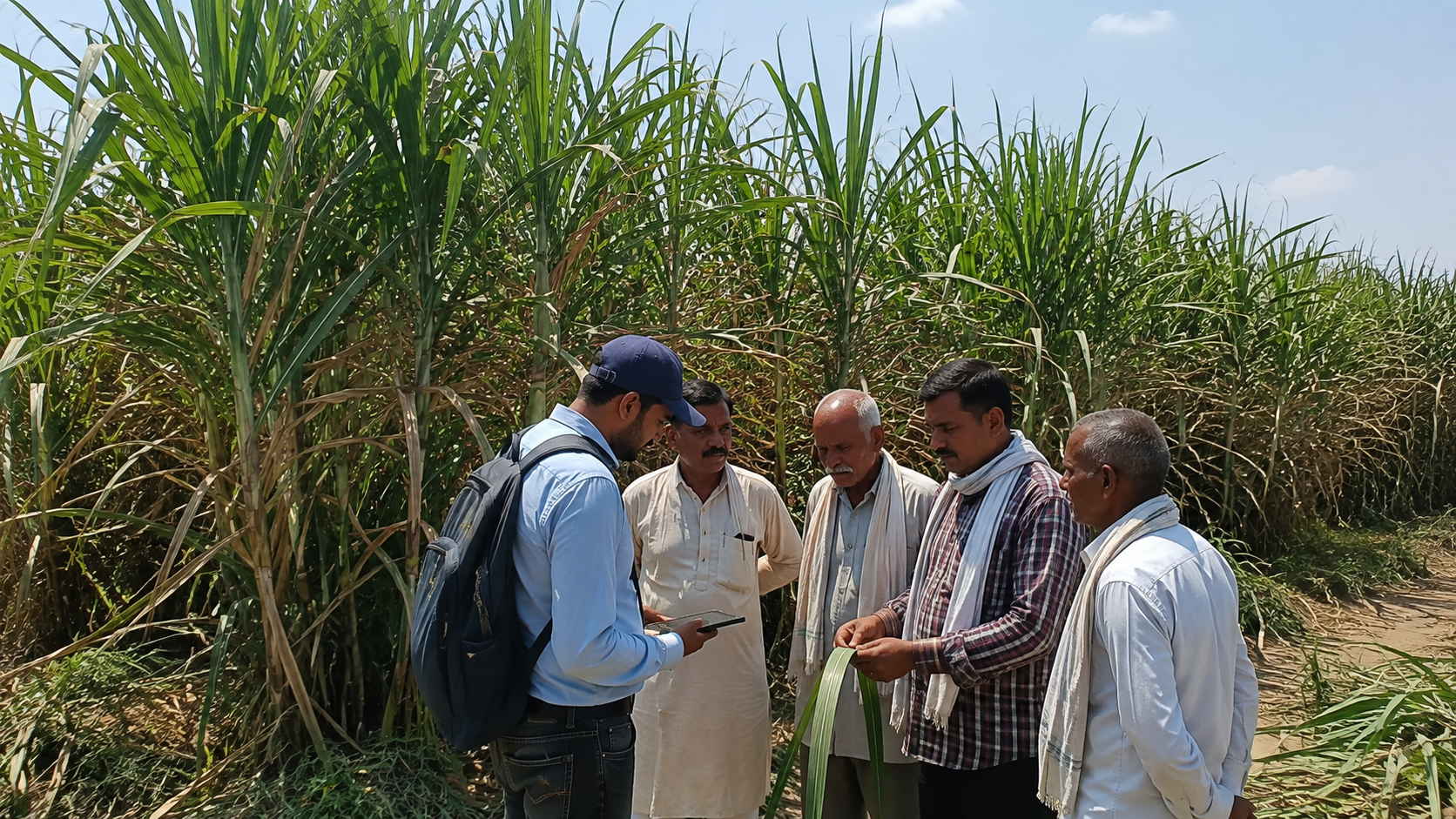
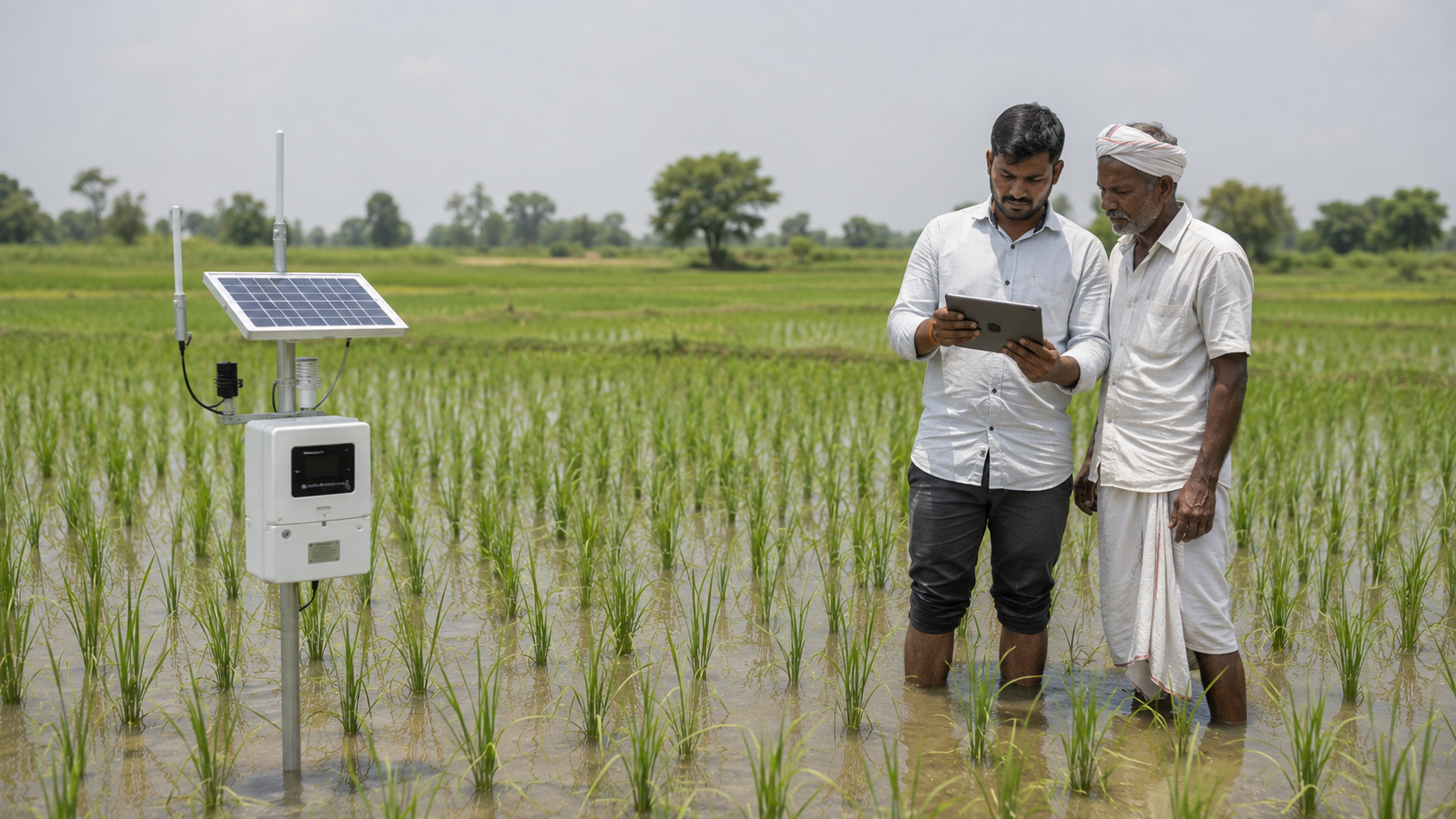
Farmers and field officers log irrigation and drying events through the offline app against the specific plot, creating the primary record of the water regime.
Satellite corroboration at cohort level
Surface water and soil moisture indicators are used to test consistency across the cohort and to identify plots whose reported events look implausible, driving risk-weighted physical sampling rather than random visits.
Continuous monitoring cycles
Monitoring periods, evidence and uncertainty statements are maintained continuously through the season, so verification examines an evidence trail rather than a reconstruction.
Outcomes
- Baselines built from cohort-measured activity data
- Practice evidence assembled from three independent sources
- Risk-based sampling replacing uninformed random visits
- Documentation maintained continuously rather than assembled before validation
See this configured for your supply chain.
A 30-minute walkthrough with your commodity, geography and compliance obligations on screen.
Book DemoRelated use cases